Physicochemical testing sits at the heart of modern drug development. Scientists use these measurements to understand how a candidate behaves from the lab bench to the patient. Properties such as solubility, pKa, lipophilicity, and solid‑state form guide key choices in molecule selection and formulation design. These data help teams predict absorption, distribution, metabolism, and excretion, and reduce late‑stage failures. Regulators also expect robust physicochemical packages to support safety and efficacy claims. As pipelines shift toward more complex small molecules and modalities, the industry relies on advanced, high‑throughput, and predictive testing strategies to speed decisions while maintaining quality and compliance.
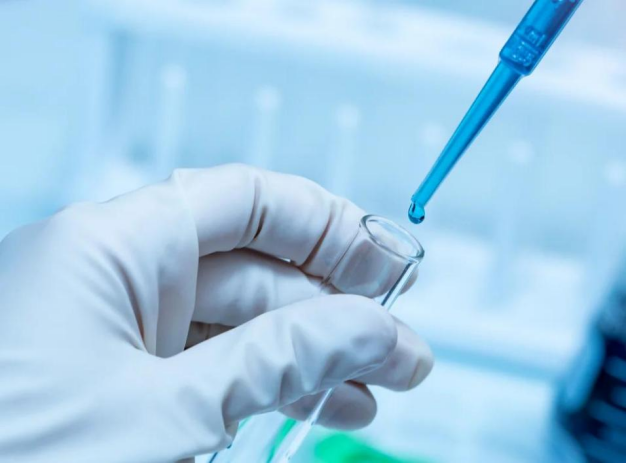
Key Physicochemical Tests Used in Modern Drug Development
Solubility, Dissolution, and pKa Testing for Formulation Optimization
Solubility and dissolution testing show how much drug dissolves and how fast it enters solution under biorelevant conditions. Scientists run equilibrium solubility, kinetic solubility, and pH‑solubility profiles to understand ionization and precipitation risks. pKa measurements define the ionization state across physiological pH and guide salt selection, buffer choice, and enabling technologies such as amorphous dispersions. Together, these tests reveal whether a molecule needs solubility enhancement and which formulation tools will work best. Development teams use the results to rank candidates, design bioavailability‑enhancing formulations, and build in vitro–in vivo correlations that support robust dose predictions.
Lipophilicity, Permeability, and Stability Evaluation Methods
Lipophilicity, often expressed as logP or logD, indicates how a compound partitions between aqueous and lipid phases. Teams measure it using shake‑flask or chromatographic methods and then link it to permeability and clearance. Permeability assays, such as Caco‑2, PAMPA, and MDCK, estimate passive and active transport across biological membranes. Stability studies assess chemical, oxidative, and photolytic degradation, as well as solid‑state transitions. Forced degradation and stress testing reveal potential impurities and guide packaging and storage conditions. By combining these methods, scientists balance potency with developability, optimize exposure, and define risk‑based control strategies for clinical and commercial products.
Advanced Analytical Technologies Used in Physicochemical Studies
Modern physicochemical testing relies on a toolbox of advanced analytical technologies. X‑ray powder diffraction, solid‑state NMR, and Raman spectroscopy characterize crystalline form, polymorphism, and amorphous content. Differential scanning calorimetry and thermogravimetric analysis reveal thermal behavior, glass transition, and hydration state. High‑performance liquid chromatography, ultra‑high‑performance LC, and LC‑MS quantify assay and impurities with high sensitivity. Dynamic light scattering and nanoparticle tracking support nanoformulation development. Techniques such as nuclear magnetic resonance and mass spectrometry also probe degradation pathways and metabolite profiles. These methods deliver detailed fingerprints of each candidate, which teams integrate with biological data to drive confident development decisions.
Emerging Trends in Advanced Physicochemical Characterization
High-Throughput Screening and Automated Testing Platforms
High‑throughput and automated platforms now transform physicochemical characterization. Miniaturized solubility, pKa, and logD assays allow teams to screen hundreds of compounds in parallel using small material amounts. Robotic liquid handlers, integrated plate readers, and automated sample preparation reduce manual bias and increase data consistency. Parallel permeability and stability screens identify liabilities early, before chemistry resources lock into weak series. Software links instruments, manages workflows, and feeds data directly into centralized databases. This automation shortens experimental cycles, supports rapid structure–property optimization, and frees scientists to focus on interpretation, mechanistic insight, and critical problem‑solving across discovery and development.
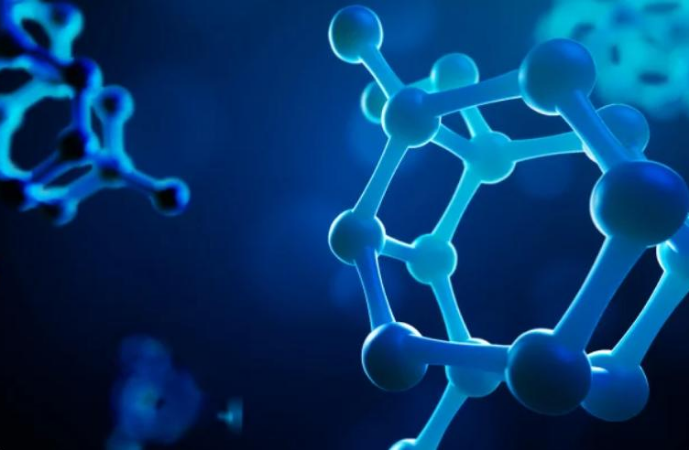
AI-Driven Modeling and Predictive Physicochemical Analysis
AI‑driven modeling now complements experimental physicochemical testing. Machine learning models predict solubility, pKa, logD, and permeability from structure, speeding initial triage of virtual libraries. Teams train algorithms on historical in‑house data to capture project‑specific patterns and formulation experience. Multi‑parameter optimization tools balance potency, lipophilicity, clearance, and safety profiles in silico before synthesis. AI models also support formulation risk assessment by predicting crystallization, polymorph formation, and physical stability. By coupling predictions with small, targeted experimental sets, scientists refine models iteratively. This combined approach cuts development cycles, reduces material usage, and increases confidence in early candidate selection.
Integrating Physicochemical Data Into Drug Discovery and Development
How Physicochemical Testing Supports Preclinical and ADME Studies
Physicochemical data provide the foundation for robust preclinical and ADME strategies. Solubility and dissolution profiles help design suitable vehicles for in vivo studies and ensure adequate systemic exposure. pKa, logD, and permeability estimates feed into pharmacokinetic models that predict absorption and tissue distribution. Stability data define storage, handling, and sample integrity conditions across toxicology, bioanalysis, and formulation work. Solid‑state characterization supports the selection of the right form for scale‑up and animal dosing. By integrating these measurements with in vitro ADME assays and early pharmacology, teams refine dose projections, reduce variability, and de‑risk the transition into human studies.
Regulatory Expectations and Quality-by-Design Strategies
Regulators expect sponsors to justify formulation, process, and control choices with strong physicochemical evidence. Quality‑by‑Design frameworks start with a clear target product profile and use risk assessments to identify critical material attributes and critical quality attributes. Solubility, polymorphic form, and degradation behavior often rank as high‑risk factors. Development teams apply design of experiments to map how formulation and process parameters affect these properties and set proven acceptable ranges. The resulting control strategy links raw material specifications, in‑process controls, and release tests. Comprehensive physicochemical packages support regulatory filings, enable lifecycle management, and facilitate post‑approval changes with minimal disruption.
Conclusion
Advanced physicochemical testing gives drug developers a clear view of how a candidate behaves across discovery, development, and commercialization. Solubility, pKa, lipophilicity, permeability, and stability measurements define developability and guide formulation and dose design. Modern analytical technologies, automation, and AI‑driven models increase data depth, speed, and predictive power. When teams integrate these insights into ADME, safety, and regulatory strategies, they cut costly late‑stage failures and improve product robustness. As molecules grow more complex, organizations that invest in strong physicochemical capabilities will bring high‑quality, reliable, and patient‑focused therapies to market more efficiently and with higher confidence.